That which we cannot count
2025
Portland stone dust, recycled paper, timber
260 x 200 x 100cm
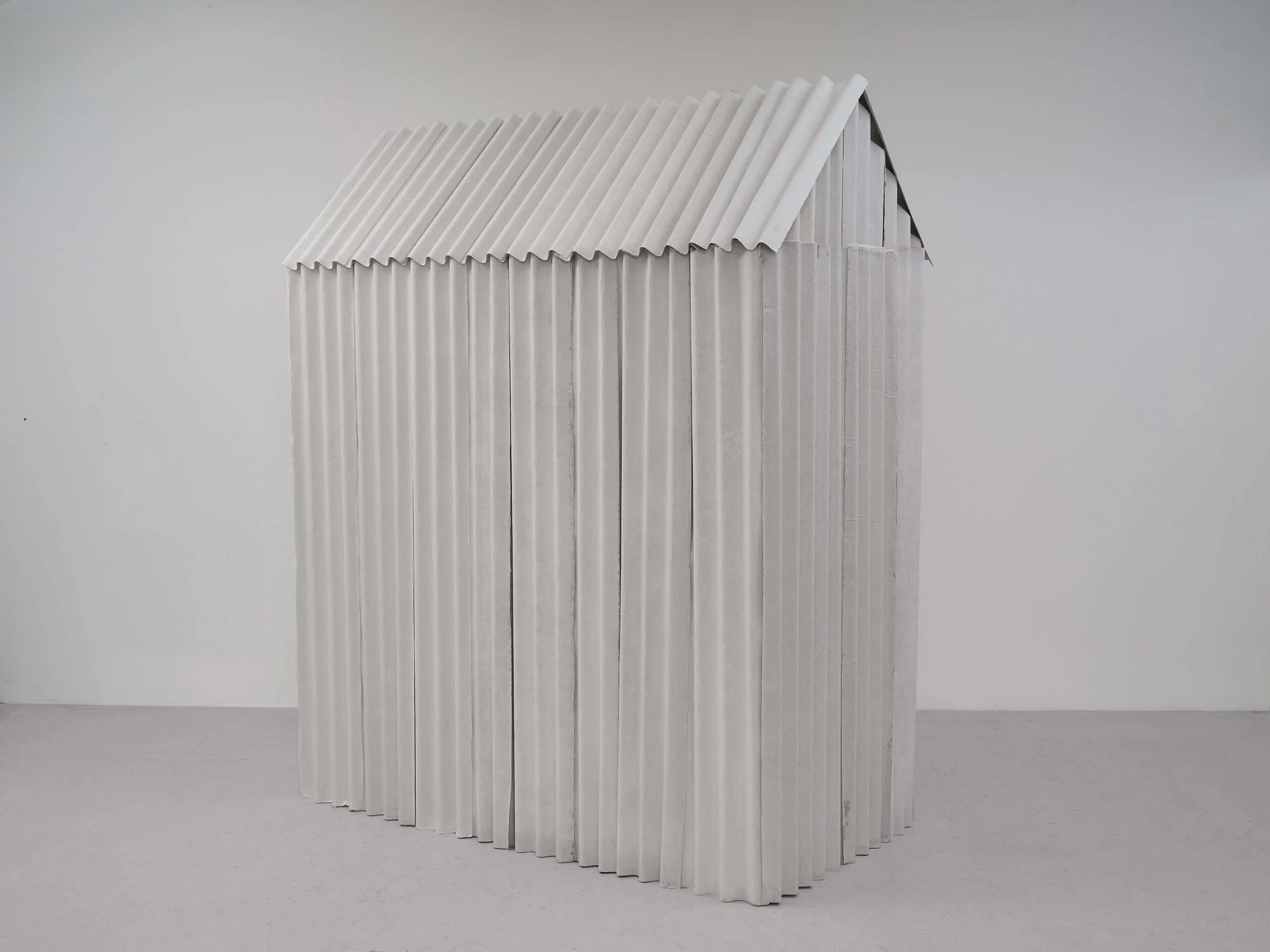
On Portland, there is a feeling of shifting impermanence; the peninsula is surrounded by sea, and there is a constant ebb and flow of tides. The sky on all sides stretches endlessly. In contradiction, the rock-strewn landscape is heavy with gravity. There is the weight of the stone, and the weight of the devastation inflicted upon the landscape from years of quarrying – an irreversible permanence. The solid ground is turned upside down, disturbed, and disrupted as if the world's core has spilled its guts. Things that should be inside are on the outside exposed to the elements. In some places, the worked white rock tumbles down the ancient cliff face, vulnerable kittens tipped out of a sack cast to their fate with their soft bellies revealed.
But there is also something whimsical happening—a disconcerting shift in scale playing back and forth—and suddenly, these kittens are fruit salad cubes tumbling and spilling down, many facets joyfully catching the light as they appear to roll.
In the Portland Museum, the industry of this landscape is clearly documented. There are tools, photos, and recordings of the work songs sung by the labourers as they toiled against the hard stone. One cannot separate the place and man's intervention. I think of the length of their working days, broken backs, sore hands, and the camaraderie among them to get a job done. And where man works, man needs shelter. It could be in nooks and crannies, but it is often a simple hut resurrected to protect from weather, somewhere to stop and drink.
The hut, for me, is a metaphor for a life being lived, a capsule of simple actions and human warmth. Yet, it also speaks of time passing, a temporary dwelling through which breath, light, and histories flow, a way to somehow materialise what has gone before.
In my hut, the walls measure two meters high, enough space for a human to stand, and the floor measures one meter by two, enough to hold a human lying down. Therefore, my hut is not only a place for the living but also a place for the dead, a tomb or a mausoleum. It speaks of the painful entanglement between presence and absence.
Stone, a material that appears permanent and stands as monuments and buildings worldwide, has been made over the millennia from hundreds and thousands of tiny shells; particles rolled together under pressure, accumulated, and cemented into layers.
On Portland, time is hard to grasp. It's slippery, both stretched and condensed. The time of a human life and the time of life on earth is hard to unpick. They are permanently impermanent, imperfect, and incomplete.